
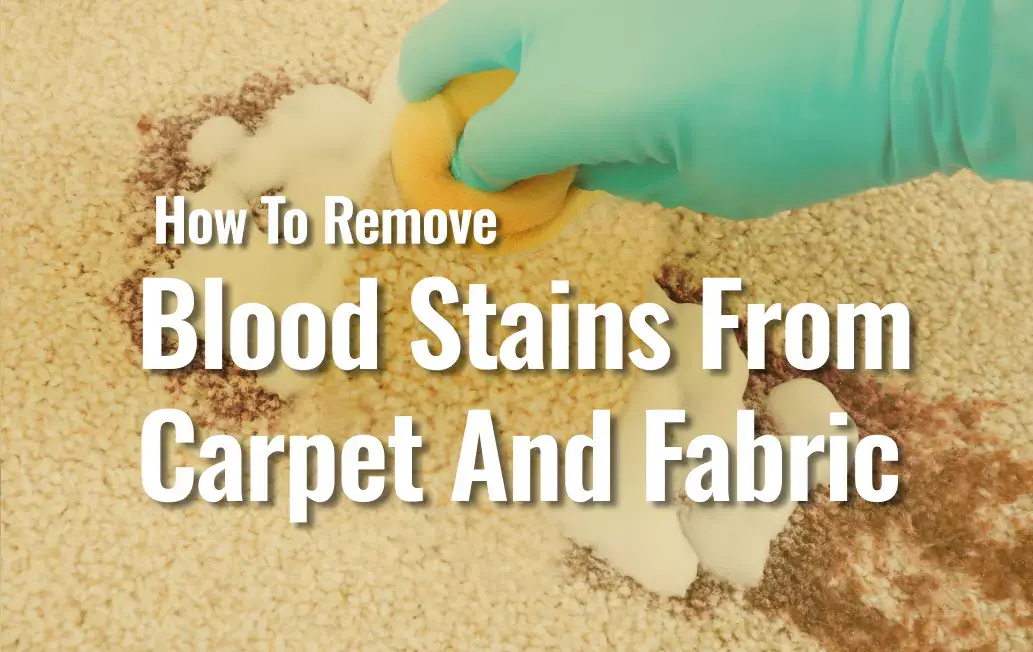
Almost every ruined blood stain is ruined by the same instinct. Someone reaches for hot water, because hot water feels like it should work harder. With blood, it does the opposite. Blood is a protein stain, and protein coagulates with heat in exactly the way egg white sets in a hot pan. Once that happens the protein bonds to the fibre and the mark becomes permanent. This is why how to remove blood stains has one non-negotiable rule that overrides every other piece of advice. Cold water, at every single stage, until the stain has completely gone.
The second thing worth knowing is that fresh and dried blood are genuinely different problems. Fresh blood is still soluble and cold water alone lifts a surprising amount of it. As it dries, the proteins denature and the iron in the blood oxidises, which is why an overnight stain looks brown rather than red and why it needs different chemistry to shift.
This guide covers the first response that applies everywhere, then separate methods for cotton bed sheets, carpet and mattresses. It explains why hydrogen peroxide works so well on blood and when it should never be used, covers period stains, and sets out what changes when blood appears in a workplace, because at a certain point this stops being a cleaning question.
Why Blood Is Different From Every Other Stain
Three components are at work, and each responds to different treatment.
- Protein. Hemoglobin and plasma proteins bind readily to cotton, linen and carpet fibre. Heat sets them permanently.
- Iron. Blood is iron-rich, and as it dries that iron oxidises. This turns a red mark rust brown and leaves the faint yellow shadow that survives on very old stains even after the protein has gone.
- Time. In the first few minutes blood behaves almost like water. Within an hour it is binding. After 24 hours it is a different job.
That gives a simple hierarchy. Speed beats technique, cold beats hot, and blotting beats scrubbing. The Carpet and Rug Institute notes that rubbing pushes material deeper into the fibres and permanently roughs up the pile, so the texture never fully recovers even if the stain does.
The First Response: Cold Water, Every Time
This sequence applies to fabric, carpet and mattresses alike.
- Blot immediately with a clean white cloth. Press straight down and lift. Never rub. Use white only, since dyed cloths and coloured paper towels release their own colour into wet fabric.
- Keep moving to a dry section of the cloth so you absorb rather than redistribute.
- Apply cold water sparingly. On washable fabric, run cold water through the back of the stain so the blood exits the way it entered.
- Try salt water on fresh stains. A teaspoon of salt in a cup of cold water draws blood out of the fibre through osmosis, and it is a useful holding measure when you have nothing else.
- Work from the outside toward the centre so the mark does not spread.
- Check in good light before anything dries, since a faint shadow means protein is still present and heat will lock it in.
Why Hydrogen Peroxide Works, and When It Does Not
Peroxide is the household product most associated with blood, and there is real chemistry behind it rather than folklore. As mentioned by McGill University’s Office for Science and Society, blood decomposes hydrogen peroxide into oxygen and water, with the heme portion of hemoglobin acting as the catalyst. That is the fizzing you see. The rapidly forming oxygen bubbles do mechanical work inside the fibre, physically lifting the protein toward the surface where it can be blotted away.
The same article notes a useful historical detail. The Swiss chemist Christian Friedrich Schönbein first observed this bubbling and reasoned that an unknown stain which foamed on contact with peroxide probably contained hemoglobin, which is the origin of presumptive blood testing.
Two practical consequences follow. Fresh blood fizzes vigorously and clears quickly, while dried blood barely fizzes at first because the peroxide has to penetrate a hardened protein layer before it reaches anything reactive. Give it longer rather than assuming it has failed. And if your peroxide does not fizz at all, it is dead, since it degrades into plain water over time. Replace the bottle. The limitation is straightforward. Peroxide bleaches. Use 3 per cent solution on white and light items, test first on anything dyed, and keep it away from wool and silk.
How to Remove Blood Stains From Cotton Bed Sheets and Clothing
Cotton is the most forgiving surface here, which is fortunate given where blood usually lands. For how to remove blood stains from cotton bed sheets, flush the back of the stain under cold running water until it runs clear, then soak in cold water for at least thirty minutes. Many fresh stains disappear at this stage with nothing else.
If a mark remains, apply 3 per cent hydrogen peroxide on white cotton for five to ten minutes, then rinse cold. On coloured sheets use an enzyme pre-treatment or cold enzyme soak instead. Wash cold and air dry, checking in good light before the item goes near a dryer.
The Enzyme Rule for Wool and Silk
This is the part almost no guide mentions, and it matters. Enzyme detergents contain protease, which digests protein. That is exactly why they are so effective on blood. The problem is that wool is made of keratin and silk is made of fibroin, and both are proteins too. As noted by the American Cleaning Institute, proteases do not distinguish between the protein in a stain and the protein in a fibre, so a protease-containing detergent is more damaging to wool than one without it.
So the best product for dried blood is the worst product for the most delicate fabrics you own. Damage is cumulative rather than instant, showing up as thinning, distortion and eventually small holes. On wool, silk or cashmere, use cold water and a pH-neutral enzyme-free detergent, and take anything valuable to a professional cleaner.
How to Get Blood Out of Carpet
Carpet holds far more liquid than fabric, so extraction matters as much as chemistry. The answer to how to get blood out of carpet is mostly about removing volume before it reaches the backing.
- Blot heavily with white towels, using body weight rather than scrubbing
- Mix one tablespoon of mild dish soap into two cups of cold water
- Apply the solution to the cloth rather than the carpet, keeping liquid out of the underlay
- Blot from the outside in, rotating to a clean section of cloth each time
- For a stubborn mark on light-coloured synthetic carpet, apply 3 per cent hydrogen peroxide, allow it to fizz for a few minutes, then blot
- Rinse by blotting with plain cold water to lift all product residue
- Fold a thick dry towel over the area, weight it down and leave it several hours
Skip the peroxide entirely on wool carpet and on any dark or richly dyed synthetic. Test in a hidden spot first, such as inside a closet.
How to Remove Blood Stains From a Mattress
This is the hardest surface in the house, because you cannot rinse it and you cannot extract it easily. The method for how to remove blood stains from mattress surfaces is built entirely around using as little moisture as possible.
- Blot first, thoroughly, removing every bit of liquid you can before adding anything.
- Make a paste rather than a solution. Cornstarch mixed with a little cold water and a few drops of hydrogen peroxide sits on the surface instead of soaking in.
- Apply, let it dry completely, then scrape and vacuum. Slow is correct here.
- Work from the outside in to avoid spreading the mark.
- Dry aggressively with a fan and an open window, and do not remake the bed until the area is fully dry. Moisture trapped in foam causes mould, and Health Canada advises keeping indoor relative humidity between 30 and 50 per cent for exactly this reason.
- Never soak a mattress. Water that reaches the foam core does not come back out.
Period Stains: Why They Need a Slightly Different Approach
Menstrual stains are one of the most common household stains and one of the least usefully covered, so here is the practical version. Two things make them different. They are usually discovered dried, because they happen overnight, so you are starting from a set stain rather than a fresh one. And they contain more than blood, including tissue and additional proteins, so an enzyme treatment generally outperforms peroxide alone.
Rinse the back of the fabric under cold running water first to remove everything still soluble. Then apply an enzyme pre-treatment or soak in cold water with an enzyme detergent for several hours, or overnight for a heavy stain. Follow with 3 per cent hydrogen peroxide on white cotton if a shadow remains, then wash cold and air dry. For mattress marks use the paste method above rather than soaking, and on wool or silk sleepwear use an enzyme-free detergent.
Do not put anything in the dryer until the stain is completely gone. A period stain that is 90 per cent cleared becomes permanent after one hot cycle, and this single mistake accounts for most of the sheets people give up on.
How to Remove Old Blood Stains and Dried Marks
Time changes the chemistry but rarely makes the job impossible. The method for how to remove old blood stains starts with rehydration. Soak the item in cold water for at least an hour so the hardened protein softens and becomes accessible. Skipping this step is why treatments that work on fresh blood appear to fail on old marks.
Then move to enzymes, which are the right tool for how to remove dried blood stains on cotton, linen and synthetics. Use a cold enzyme soak of four to eight hours, or overnight for anything that has been there for weeks. Repeat rather than escalating to a harsher product.
A brown or yellow shadow left after the protein has cleared is oxidised iron rather than blood, and an oxygen-based cold soak usually lifts it on white cotton. On carpet, a shadow at this stage is often as far as home treatment goes.
The honest answer on very old stains is that the best way to remove blood stains is still to catch them early. Success drops sharply after a hot wash, and no product reverses heat-set protein.
Common Mistakes to Avoid
- Using warm or hot water. The single most damaging error. Heat coagulates the protein and bonds it to the fibre permanently.
- Putting the item in the dryer to check. Machine heat is the point of no return. Air dry and inspect in good light instead.
- Rubbing instead of blotting. It drives protein deeper and permanently distorts carpet pile and fabric weave.
- Using an enzyme detergent on wool or silk. Protease digests the fabric along with the stain, and the damage is cumulative and irreversible.
- Using peroxide on dark fabric. It works because it bleaches, which on anything dyed is the problem rather than the solution.
- Over-wetting a mattress. Moisture in the foam core causes mould, which is a far bigger problem than the original mark.
Tools and Products Worth Keeping
- White cotton cloths or plain white paper towels, since dyed cloths bleed
- 3 per cent hydrogen peroxide, replaced regularly so it stays active
- An enzyme laundry pre-treatment or detergent for dried and period stains
- An enzyme-free pH-neutral detergent for wool, silk and cashmere
- Plain table salt for the saline method on fresh stains
- Cornstarch for the mattress paste
- A mattress protector, which prevents more work than any product removes
For households that prefer certified low-toxicity products used consistently, Supreme Cleaning Group offers eco-friendly cleaning services across the GTA.
Blood in Workplaces and Shared Spaces
Everything above assumes a household stain of known origin. In a workplace, a clinic or any shared setting, blood of unknown origin is treated as potentially infectious and the priority changes from appearance to safety.
The sequence is different. Wear disposable gloves and eye protection, and absorb the bulk with disposable towels rather than reusable cloths. Clean the surface first, because soil physically shields microorganisms from any disinfectant. Then disinfect with a product carrying a Drug Identification Number and respect the contact time on the label. Health Canada’s Hard Surface Disinfectants
Monograph sets the minimum concentrations and contact times a product must meet for its claims, and a surface wiped dry after three seconds has been cleaned rather than disinfected.
Dispose of contaminated materials appropriately, and never vacuum wet contamination. Dental offices, medical clinics, daycares and gyms across the GTA need this written into a documented protocol, since staff turnover means the knowledge has to live in the procedure rather than in one person.
How to Reduce the Risk of Blood Stains
- Use a waterproof mattress protector. It is the highest-return purchase in this article and it makes almost every mattress problem into a laundry problem instead.
- Keep dark-coloured bedding for the nights you expect to need it, which removes the anxiety rather than the stain.
- Keep a small stain kit in the bedroom, since the minutes saved walking to a laundry cupboard decide the outcome.
- Treat before sleep rather than after, since a stain caught wet is a five-minute job and one caught dry is an overnight soak.
- Keep a first aid kit accessible in kitchens and workshops, where most household cuts happen.
- Rinse cloths and towels immediately rather than leaving them piled, since blood transfers between damp fabrics.
Blood Stain Response Checklist
- Blot immediately with a white cloth, never rub
- Use cold water at every stage, with no exceptions
- Flush washable fabric from the back of the stain
- Check the fibre before choosing a product, and keep enzymes off wool and silk
- Use 3 per cent peroxide on white and light items only, testing first
- Soak dried stains in cold water before treating them
- Apply solutions to the cloth rather than the carpet
- Use a paste rather than liquid on mattresses
- Air dry and inspect in good light before any heat
- Treat unknown-origin blood in shared spaces as a disinfection task
Final Thoughts
The whole of how to remove blood stains rests on one rule that never bends. Cold water, at every stage, until the mark is completely gone. Heat is what makes blood stains permanent, and it usually arrives in the form of a dryer cycle run to check whether the treatment worked.
After that, match the method to the material. Cotton responds to a cold soak and peroxide. The carpet needs volume removed before chemistry is applied. Mattresses need a paste rather than a liquid, because you cannot rinse foam. And wool and silk need the opposite of everything else, since the enzyme products that excel on dried blood slowly digest the fabric itself.
Knowing how to remove old blood stains is mostly patience. Rehydrate first, use a long cold enzyme soak, and repeat rather than reaching for something harsher. Most set stains come out eventually, provided nothing hot has touched them.
When blood turns up in a workplace or clinical setting, treat it as a disinfection task rather than a stain, and get the protocol written down. If you look after premises where that matters, or have a carpet or mattress past the point where blotting helps, our team is happy to take a look. Supreme Cleaning Group provides free estimates across Markham, Toronto, Richmond Hill, Ajax, Oshawa, Stouffville and the surrounding GTA.
Frequently Asked Questions
- Should you use hot or cold water on a blood stain?
Cold, always. Blood is a protein stain and heat coagulates the protein into the fibre, making the mark permanent. This applies to rinsing, soaking, washing and drying. - Why does hydrogen peroxide bubble on blood?
Blood decomposes hydrogen peroxide into oxygen and water, with the heme in hemoglobin acting as the catalyst. The oxygen bubbles physically lift the protein out of the fibre, which is why the fizzing is doing useful work. - Can you remove blood stains that have already dried?
Usually yes. Soak in cold water for at least an hour to rehydrate the protein, then use a cold enzyme soak for four to eight hours. Repeat rather than escalating to a stronger product. - What removes period stains from sheets?
Rinse the back of the fabric under cold running water, then soak in cold water with an enzyme detergent for several hours. Follow with 3 per cent hydrogen peroxide on white cotton if a shadow remains. - How do you get blood out of a mattress without soaking it?
Use a paste of cornstarch, cold water and a little hydrogen peroxide. Apply it, let it dry completely, then scrape and vacuum. Dry the area with a fan before remaking the bed. - Is hydrogen peroxide safe on all fabrics?
No. It bleaches, so it belongs on white and light-coloured items only and should be tested first on anything dyed. Never use it on wool or silk. - Why should I avoid enzyme detergent on wool and silk?
Both fibres are made of protein, and the protease enzymes that break down blood cannot tell stain protein from fibre protein. The damage is cumulative and shows up as thinning and small holes. - Does salt water really work on blood stains?
On fresh stains, yes. A teaspoon of salt in a cup of cold water draws blood out of the fibre through osmosis. It is a useful first measure when nothing else is available. - Why has my blood stain turned brown or yellow?
That is oxidised iron rather than blood, and it appears as the stain ages. An oxygen-based cold soak usually clears it from white cotton after the protein has been removed. - How should a workplace handle a blood spill?
Wear gloves and eye protection, absorb with disposable materials, clean the surface first, then disinfect with a DIN-registered product and respect the labelled contact time. Never vacuum wet contamination.