
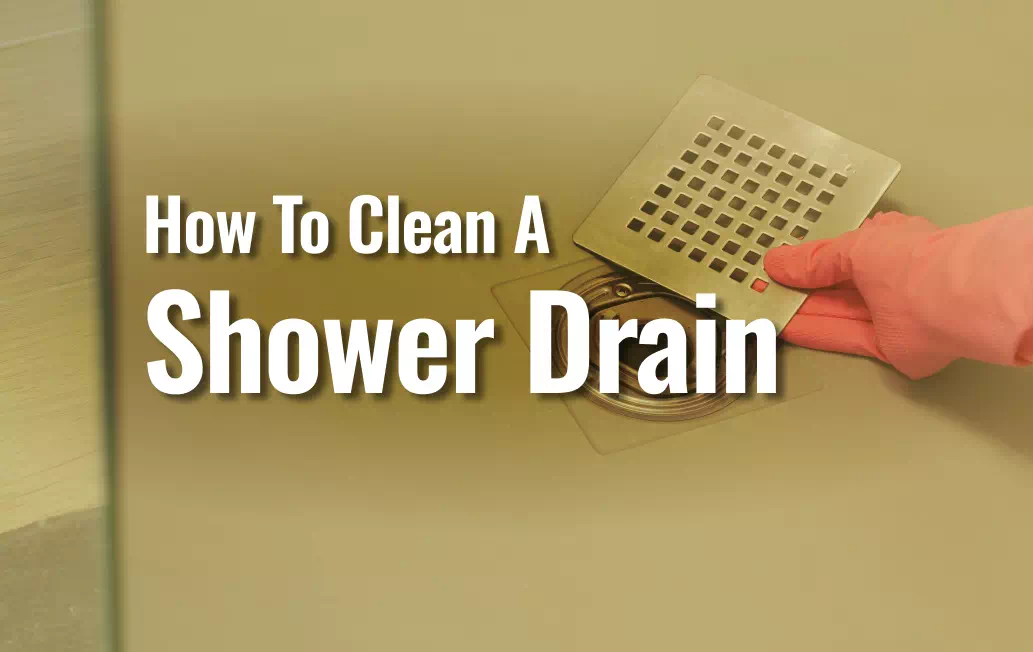
The water pools around your ankles a little longer than it used to. A week later it takes a full minute to drain after you shut the tap off. By the time most people start searching how to clean a shower drain, the problem has been building quietly for months.
Shower drains collect a very specific kind of debris. The American Academy of Dermatology notes that shedding 50 to 100 hairs a day is completely normal. A good portion of that ends up in the shower, where it catches on the strainer and the pipe walls and gets cemented in place by soap residue and body oil. Nothing about this is a sign of neglect. It is simply what happens when hair, oils, and hard water meet in the same drain every day.
The problem is that most advice online skips straight to pouring something down the pipe. That approach fixes the symptom for a week and often makes the underlying buildup worse.
This guide takes a different route. It covers what is actually accumulating in your drain, how to open the common drain types found in GTA homes, a routine cleaning process, how to unclog a shower drain including when there is standing water on top of it, an honest assessment of the baking soda and vinegar method, and why a smelly drain is often not a cleaning problem at all. It also covers the point where the job stops being cleaning and becomes plumbing, because knowing that line saves money and prevents damage.
Why Shower Drains Clog in the First Place
A shower drain clog is rarely one substance. It is a composite, and understanding the mix explains why single-ingredient solutions disappoint.
- Hair provides the structure. Strands catch on the strainer crossbars, the stopper mechanism, and any rough spot inside the pipe. Once a few are anchored, they trap everything that follows.
- Soap scum acts as the binder. This is the part most people miss. Traditional bar soap reacts with the calcium and magnesium in hard water to form an insoluble film. That film coats the inside of the drain and turns loose hair into a solid mat. If you have already read our guide on how to clean shower tiles and remove soap scum, the same chemistry is at work a few centimetres below the floor.
- Body oils, skin cells, and product residue fill the gaps, feeding a bacterial biofilm that coats the pipe wall and regenerates quickly. That is why a clog can return within weeks if nothing was physically removed from the pipe itself.
- Shaving over the drain. shaving over an open drain sheds fine hair that slips past strainers.
Why This Is Worse in Parts of the GTA
Water hardness varies considerably across the region. Communities served by groundwater generally see heavier mineral content than those drawing from Lake Ontario, and harder water produces more soap scum. More soap scum means a stickier drain wall and a faster clog cycle.
Older housing stock adds another factor. The City of Toronto notes that sewer pipes in older homes may be cast iron or clay and can crack or be infiltrated by tree roots over time. In those homes, a slow shower drain is occasionally a symptom of something much further down the line.
Know Your Drain Type Before You Start
You cannot clean what you cannot open, and forcing the wrong mechanism is how people crack a drain body or strip a screw.
| Drain type | How to open it | Where you will find it |
| Screw-in strainer | Remove the single Phillips screw in the centre, then lift the cover out | Common in older GTA homes and standard tiled showers |
| Snap-in or push-in strainer | Pry up gently with a flathead screwdriver wrapped in cloth to protect the finish | Widespread in newer builds, held by friction only |
| Lift-and-turn stopper | Lift the knob, turn counterclockwise, then loosen the small set screw underneath | Tubs and tub-shower combinations |
| Toe-touch or push-pull stopper | Unscrew the top cap by hand, then unthread the shaft below it | Common in newer tubs and renovated bathrooms |
| Linear or trench drain | Lift the grate straight out, usually with no tools at all | Curbless showers and newer condo builds across the GTA |
If a strainer will not lift after the screw is out, it is likely sealed by years of hardened soap scum rather than stuck mechanically. Run hot water over it for a minute, then work a plastic putty knife around the edge. Do not lever against the tile.
Tools and Products That Actually Work
You do not need much, and almost none of it is a chemical.
The essentials:
- A plastic barbed drain tool, the flexible strip with hooks along both sides. It costs a few dollars and outperforms nearly everything else for hair removal.
- Phillips and flathead screwdrivers
- Needle-nose pliers for hair wrapped around a stopper shaft
- A narrow bottle brush or dedicated drain brush for scrubbing the drain throat
- Nitrile gloves, ideally a longer cuff
- An old towel and a small bucket
Worth adding: a cup plunger with a little petroleum jelly to improve the seal, a 25 foot hand auger for clogs beyond arm’s reach, an enzyme drain maintainer for monthly upkeep, and ordinary dish detergent, which does more for a greasy drain wall than most specialty products. A wet and dry shop vacuum is the most underrated drain tool that many households already own.
Leave these out of the shower:
- Caustic and acidic chemical drain cleaners, for reasons covered further down
- Wire coat hangers, which scratch pipe walls and usually push the clog deeper
- Boiling water in a shower with PVC or ABS drain lines, since sustained boiling temperatures can soften plastic joints. Very hot tap water is the safer choice.
How to Clean a Shower Drain: Step-by-Step
This is the routine version, done on a drain that still flows. It takes about 15 minutes.
- Remove the strainer or stopper, matching the method to your drain type. Put the screw somewhere it cannot roll into the drain, which happens more often than you would think.
- Pull out what you can reach. Wear gloves and use needle-nose pliers for anything wound around a stopper shaft. Debris goes straight into a bin, never back down the drain.
- Work the barbed drain tool in. Feed it in slowly, rotate it a full turn or two to wrap the hair around the barbs, then withdraw it in one steady pull. Three or four passes is typical on a drain that has not been cleared in a year.
- Scrub the drain throat. This step gets skipped constantly and it matters most. Use the bottle brush with a squeeze of dish detergent on the vertical walls of the drain opening. You are removing the biofilm and soap film that new hair sticks to.
- Clean the strainer separately, soaking it in hot water with detergent and scrubbing both faces. The underside is usually far worse than the top.
- Flush with hot water and detergent for two to three minutes. The surfactant lifts the loosened oils and carries them out rather than letting them resettle.
- Reinstall and test. The shower should clear without pooling. If it still backs up, the blockage is deeper and the next section applies.
For monthly upkeep, add an enzyme drain maintainer last thing at night when the shower will sit unused for several hours. Enzymes digest organic buildup slowly. They will not clear a clog, but they meaningfully slow the rate at which the drain wall recoats.
How to Unclog a Shower Drain, Including With Standing Water
A clogged drain needs a different sequence, and the order matters more than the tools.
Start By Removing the Standing Water
Do not skip this. Standing water dilutes anything you add, prevents a plunger from developing proper suction, and turns any chemical you pour in into a hazard sitting at ankle height. Bail it into a bucket with a cup or jug, or vacuum it out with a wet and dry shop vacuum. Get the shower floor as close to dry as you reasonably can before doing anything else.
Then Work Through These Steps in Order
- Remove the strainer and clear everything reachable by hand. In most shower clogs, the blockage sits within the first few inches of the drain and many people never check because the strainer has been screwed down since the bathroom was built.
- Use the barbed drain tool aggressively. Feed it in until it stops, twist, and pull back slowly. Expect what comes out to be unpleasant. That is the job working.
- Try the wet and dry vacuum. Set it to wet mode, remove the filter as the manufacturer directs, seal the hose over the drain with a wet rag packed around it, and run it. Suction pulls a clog toward you instead of driving it deeper, which no other household method does.
- Plunge properly. Use a cup plunger rather than a toilet flange plunger, add just enough water to cover the cup, smear petroleum jelly on the rim for a better seal, and block the overflow with a wet cloth if you are working on a tub. Firm, steady strokes for 20 to 30 seconds.
- Snake it. Feed the hand auger in until you meet resistance, then crank while applying light forward pressure. When the cable breaks through or grabs, withdraw it slowly. Clean the cable outside, not in the shower.
- Flush and verify with hot water and dish detergent for several minutes.
Stop and Call a Plumber If Any of These Are True
- More than one fixture is draining slowly at the same time
- The toilet gurgles when the shower or sink runs
- A basement floor drain backs up when the washing machine empties
- Water rises in the tub or shower when you flush a toilet
- The clog returns within days of being cleared
These are signs the blockage is in the main line rather than in your shower. The City of Toronto identifies tree roots, pipe deterioration, and improperly flushed items as common causes of blocked and backed-up drains, and none of them are fixable from the shower floor. Continuing to snake or pour products into a main line blockage risks a sewage backup into the home.
Does Cleaning a Shower Drain With Baking Soda and Vinegar Actually Work?
This is worth an honest answer, because the method is recommended almost universally online and it is only partly right. When baking soda meets vinegar, an acid-base reaction produces carbon dioxide gas, water, and sodium acetate. The fizzing is dramatic and the visual is satisfying. The chemistry underneath is less impressive.
What it genuinely does:
- Deodorises effectively. It neutralises odour compounds sitting near the drain opening.
- Provides light mechanical agitation that can shift loose surface debris.
- Costs almost nothing and poses no risk to pipes, unlike caustic products.
What it does not do:
- Dissolve hair. Hair is keratin, and neither ingredient touches it.
- Cut grease. Breaking down oils requires heat and a surfactant, which is exactly what dish detergent and hot water provide and this mixture does not.
- Build pressure. A drain is an open system. The gas escapes upward rather than pushing a blockage down.
- Last. Once the fizzing stops, what remains is a near-neutral solution of salt and water with very little cleaning power.
The practical verdict: use it as a monthly deodoriser on a drain that already flows. Do not rely on it to clear a clog. If you want a low-cost method that actually removes buildup, hot water with dish detergent after mechanical hair removal will outperform it every time.
How to Clean a Smelly Shower Drain
An odour and a clog are different problems with different causes, and treating a smell as a cleaning failure sends people down the wrong path.
First, Check Whether the Trap Has Dried Out
Every shower has a P-trap, the U-shaped section of pipe below the drain that holds a small volume of water. That water is a seal, and it is the only thing standing between your bathroom and the sewer line.
In a drain that goes unused for several weeks, the water in the trap evaporates and the seal breaks. Sewer gas then travels freely up the pipe. The smell is sharp, sulphurous, and appears without any visible dirt.
- The test takes 30 seconds. Run the shower for a full minute, then leave the room and come back after half an hour. If the odour is gone, the trap was dry and there was never anything to clean.
- The fix is equally simple. Run water in that shower once a month. For guest bathrooms, basement showers, and seasonal properties that sit empty over the winter, add a tablespoon of mineral oil after refilling the trap. It floats on the surface and slows evaporation considerably.
This is the single most common cause of a mystery bathroom odour, and almost no cleaning article mentions it.
If the Trap Is Wet, It Is Biofilm
A musty or sour smell from a drain in daily use points to the bacterial layer coating the pipe wall. The fix is the mechanical cleaning process described earlier, because you have to physically remove the film rather than mask it.
The pink or orange slime that appears around drains and along the shower floor is usually a bacterial biofilm rather than mould. It feeds on soap residue and body oils, which is why it reappears in exactly the same spots.
This matters for hygiene reasons too. In NSF International’s testing of household surfaces, the shower and tub drain ranked among the germiest locations sampled, with coliforms and E. coli present. A drain can look acceptable and still hold a substantial bacterial load.
If the Smell Persists After Both
A lingering sewage odour with a wet trap and a clean drain points to a venting problem, a failed seal elsewhere in the bathroom, or an issue in the line. That is a plumber’s call.
Why Chemical Drain Cleaners Should Be a Last Resort
Retail drain cleaners work by aggressive chemistry rather than removal. Poison Control explains that non-enzymatic drain cleaners rely on corrosive acids such as sulfuric and hydrochloric acid or alkalis such as sodium and potassium hydroxide, and that some generate heat when they react. Because of those high concentrations, the products are dangerous when used without proper protection, and ingestion can cause severe chemical burns.
The practical objections matter too. These products rarely remove a clog, they erode a channel through it, so the mass stays and the drain recloses. The heat they generate stresses PVC and ABS joints. Splashes leave permanent marks on acrylic bases, enamel tubs, and grout. And when the product fails, you are left with a pool of corrosive liquid sitting on top of the blockage, which anyone who then plunges or snakes that drain will encounter as splash-back.
If a clog resists mechanical methods, the correct next step is a plumber with a proper auger, not a stronger chemical.
Common Mistakes to Avoid
- Reaching for chemical drain cleaner first. It is the fastest route to a bigger repair bill and a genuine safety hazard in a small enclosed bathroom.
- Pouring boiling water into a plastic drain line. Very hot tap water is fine. Sustained boiling water can soften PVC and ABS joints and can crack porcelain if it hits a cold fixture.
- Using a wire coat hanger. It scratches the pipe wall, creating fresh anchor points for hair, and typically compacts the clog rather than pulling it out.
- Ignoring a slow drain for months. A drain that is 30 percent restricted is a 10 minute job. The same drain at 90 percent is a plumber’s visit.
- Forgetting the overflow when plunging a tub. Without blocking it, air escapes through the overflow and you generate almost no suction.
- Treating a sewer smell as a cleaning problem. If the trap is dry, no amount of scrubbing helps, and you will keep repeating the wrong task.
What Professional Cleaners and Facility Teams Do Differently
Commercial cleaning crews service washrooms and shower facilities in gyms, condo amenity floors, clinics, and workplaces, where a blocked or smelly drain becomes a complaint the same day. Their approach is built around prevention rather than rescue.
- They treat drains as scheduled maintenance. A drain cleared on a fixed interval never becomes an emergency, and reactive cleaning always costs more than the alternative. Enzyme maintainers are part of that schedule, dosed when the fixture will sit unused for several hours so the product has contact time.
- They remove rather than dissolve. Mechanical extraction and wet vacuuming take material out of the system. Chemical approaches leave the mass in place and move the problem downstream.
- They fit hair catchers as standard and log slow drains. In shared facilities a catcher on every drain is not optional, and a drain trending slower gets flagged before it stops. In multi-unit buildings this matters enormously, because shower stacks are often shared and one unit’s neglect becomes another unit’s backup.
- They know where cleaning ends. This distinction is worth borrowing. A professional cleaning service handles drain hygiene, hair removal, biofilm, and odour as part of a bathroom clean. A blocked line, a failed trap, or a venting fault is plumbing work. Being clear about that boundary protects the property and gets the problem to the right person the first time.
How Often Should You Clean a Shower Drain?
| Frequency | Task |
| After each shower | Lift the hair catcher and bin the hair. It takes five seconds and prevents most of what follows. |
| Weekly | Remove the strainer, clear anything visible, run hot water with dish detergent for two minutes. |
| Monthly | Full barbed-tool pass, scrub the drain throat and strainer, apply an enzyme maintainer overnight. Run water in any shower that has not been used. |
| Quarterly | Time how long the shower takes to drain and compare it to last quarter. A slowing trend is your early warning. Inspect the stopper mechanism. |
| Annually | For homes over 30 years old, or any property with a history of backups, consider a plumbing inspection of the drain line. |
Shared and commercial showers in gyms, condo amenity areas, and workplace facilities need the weekly tasks done daily and the monthly tasks done weekly, simply because of usage volume.
How to Keep a Shower Drain Clog-Free
Prevention here has an unusually high return, because the interventions are cheap and the failures are expensive.
- Fit a hair catcher and actually use it. A silicone or stainless catcher costs under $15 and stops the majority of what causes clogs. The only reason people abandon them is forgetting to empty them, so make it part of the same habit as squeegeeing the walls.
- Brush your hair before you shower, not in it, and avoid shaving over an open drain. Loose strands end up in a brush instead of a pipe, and trimmings are fine enough to slip past a strainer but coarse enough to catch on everything downstream.
- Switch from bar soap to liquid body wash. Synthetic detergents do not form the calcium precipitate that binds hair into a mat. In harder water areas of the GTA this makes a visible difference to how quickly a drain recoats.
- Run hot water with detergent weekly. Thirty seconds of surfactant and heat keeps the pipe wall from developing the sticky layer that everything else adheres to.
- Never rinse cooking oils or fats down any drain in the home. The City of Toronto is direct about this, noting that fats, oils and grease cool and harden inside pipes and are among the most common causes of blockages and basement flooding. The same applies to wipes of any kind, including those labelled flushable.
- Keep humidity under control. Health Canada recommends maintaining indoor relative humidity between 30 and 50 percent and running bathroom exhaust fans during and after showering. Drier surfaces slow biofilm growth around the drain and the shower floor.
Ontario Conditions Worth Planning Around
Basement and guest showers across the GTA sit unused for long stretches, particularly through the winter when the house is sealed and heated. That is exactly the condition that dries out a P-trap. A monthly minute of running water prevents an odour that is otherwise misdiagnosed for weeks.
Condo residents face a different issue. Shower stacks are frequently shared between units, so what one household puts down a drain affects the neighbours below. Many buildings restrict caustic drain products for that reason, since corrosive chemicals sitting in a shared vertical stack are a building-wide liability rather than a personal one. For a broader routine that covers the whole room, see our guide on how to deep clean a bathroom.
Final Thoughts
Knowing how to clean a shower drain properly comes down to a short list of principles. Remove material rather than trying to dissolve it. Clear standing water before you attempt anything else. Scrub the drain throat, because that surface is what everything sticks to. Reach for mechanical tools before chemical ones. And recognise the point where the problem has moved beyond the shower into the line.
The recommendations most worth acting on:
- Fit a hair catcher this week, and empty it after every shower
- Keep a barbed plastic drain tool in the bathroom cabinet and use it monthly
- Use baking soda and vinegar as a deodoriser, not as a clog remover
- Run water in unused showers monthly to keep the trap sealed
- Stop and call a plumber the moment a second fixture starts draining slowly
Professional help is worthwhile when a property is being turned over between tenants or listed for sale, when you manage shared facilities where hygiene standards are not optional, or when you would rather the whole bathroom was handled properly on a schedule.
Supreme Cleaning Group has served homes and businesses across Markham, Toronto, Mississauga, Vaughan, Richmond Hill, and communities throughout Ontario since 1999. Our teams handle bathroom and washroom cleaning in condos, offices, clinics, gyms, and rental turnovers, including drain hygiene as part of a thorough clean. For blocked lines and plumbing faults we will tell you plainly that you need a licensed plumber.
If your bathrooms would benefit from a proper schedule rather than an occasional scramble, request a free estimate and we will build a plan that fits the property. A professional deep cleaning service is often the fastest way to reset a bathroom that has drifted.
Frequently Asked Questions
- How do I unclog a shower drain with standing water?
Bail or shop-vac out the standing water first. It dilutes cleaners and stops a plunger from sealing. Then clear the strainer by hand, work a barbed drain tool in and out, and try a shop vac sealed over the drain before you plunge. Suction pulls the clog toward you instead of pushing it deeper. - How do I clean hair out of a shower drain without touching it?
A barbed plastic drain tool works best. Feed it in, twist a full turn so the hair wraps around the barbs, and pull it out slowly. Skip wire coat hangers. They scratch the pipe and usually push the clog deeper. - Does baking soda and vinegar unclog a shower drain?
Not reliably. It’s a decent monthly deodoriser, but it won’t dissolve hair or cut grease, and the gas just escapes upward instead of building pressure. For a real clog, mechanical removal plus hot water and dish detergent works better. - Why does my shower drain smell like sewage even though it looks clean?
The P-trap has probably dried out. Run the shower for a minute, leave the room, and check again in 30 minutes. If the smell is gone, that was the cause. Prevent it by running water in unused showers once a month. - Why does my toilet gurgle when the shower drains?
That usually points to a venting problem, not a clog in the shower itself. Air is trying to escape through the nearest fixture as water rushes down the line. It’s a sign the drain system needs a plumber’s look, not more cleaning. - My bathroom is newly renovated or the house is new. Why does it already smell?
A P-trap that has never been filled won’t seal against sewer gas, and this happens often on new installs. Run water in that drain for a minute. If the smell disappears, the trap just needs filling, not repair. - Is it safe to use chemical drain cleaner in a condo?
Generally no. Condo shower drains often feed a shared vertical stack, and many buildings restrict caustic products for that reason. Stick to mechanical methods, or contact building management if the problem is in the stack. - How often should I clean a shower drain?
Empty the hair catcher after every shower, flush weekly with hot water and detergent, and do a full barbed tool pass once a month. - What’s the pink or black slime around my drain?
Pink is usually bacterial biofilm, not mold. Clean it and improve ventilation. Black growth inside the caulk is mould and needs the caulk cut out and replaced, since no cleaner reaches it.